Neuroscience · Stanford University

Connecting
neural activity
to cellular identity.

I develop genetic and optical tools to understand how individual neurons contribute to the circuits that shape brain function.

Senior Research Scientist Schnitzer Lab

Explore my research
Precision optogenomicsEGFP readout
Later · EGFP expressionExperimental readout

Optogenomics 2.0 validation

Ali Cetin · Unpublished

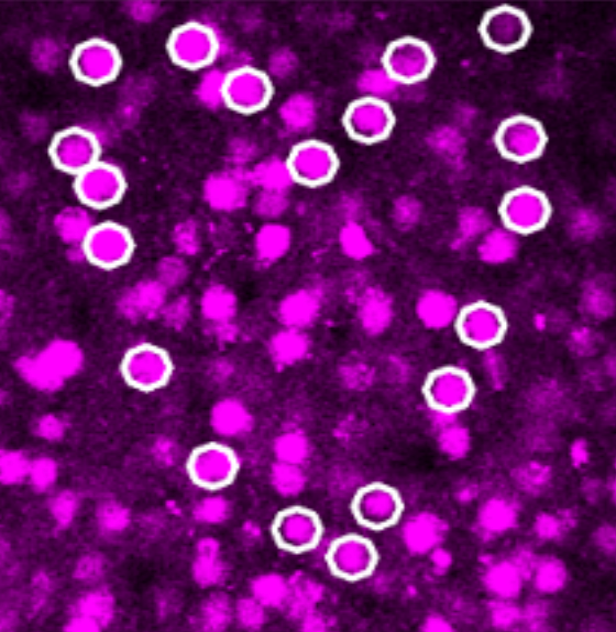
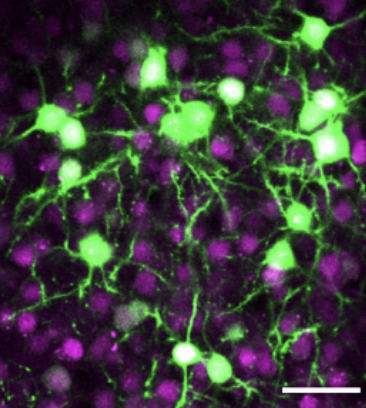
Actual microscopy. Schematic laser pulses. The animation compresses the interval before EGFP expression.

Experiment details

FiCreV imaging at 1100 nm, neuronal activity imaging at 940 nm, and targeted heart-shaped photoconversion at 920 nm. EGFP expression confirms recombination in the neocortex of Ai140 EGFP reporter mice. Scale bar: 50 µm.

Validation dataset. Wavelength comparisons measure recombination efficiency as a function of distance from the neuron center, with optimal performance at 920 nm. Data represent mean ± SEM (≥8 neurons). The animation illustrates the targeting sequence; the experimental images show the outcome.

Open the full validation figure

Molecular tools. Optical precision. Circuit neuroscience.

Stanford, California

01 Research

Different measurements.
The same neuron.

What does a neuron do? Which genes does it express? Where does it connect? I build experimental tools that bring these questions together.

Genetic access through light

I develop light-inducible recombinases to modify genomes in individual neurons and defined cell populations. RecV established this optogenomic approach; my ongoing TRACE work aims to connect functional imaging with two-photon genetic targeting.

Read the RecV study
  • Optogenomics
  • Two-photon targeting
  • Recombinase engineering

Cell-specific circuit mapping

I develop viral vectors and tracing methods to identify the connections of defined neuronal populations. At the Allen Institute, I led large-scale workflows for whole-brain monosynaptic input mapping and viral tool development.

Read the visual cortex connectome study
  • Viral vectors
  • Monosynaptic tracing
  • Cell-type targeting

Function, identity, and anatomy

I work to connect neuronal activity with molecular profiles and circuit organization. For the collaborative TRU-FACT study, I contributed genetic barcodes and viral vectors to support the alignment of in vivo imaging with spatial biology.

Read the TRU-FACT preprint
  • Functional imaging
  • Genetic barcodes
  • Spatial biology

02 Publications

Selected
work.

Methods and discoveries across optogenomics, viral technology, and neural circuits.

My ORCID record

I also publish as A. Cetin and A. H. Cetin.

Earlier selected publications

03 About

Ali H. Cetin

Ali H. CetinPhD

Neuroscientist & tool builder

I am a Senior Research Scientist in Stanford University’s Department of Biology, working in Mark Schnitzer’s lab, and an Affiliate Assistant Professor at the University of Washington.

My work brings molecular biology, genetics, physiology, and optical imaging together to study defined neurons and their circuits. I develop technologies that give researchers precise access to the cells they want to understand.

Before joining Stanford, I built and directed the Mesoscale Connectomics Pipeline and Viral Vector Core at the Allen Institute for Brain Science. At Stanford, I also served as General Director of the Center for High-Throughput Quantitative Biology (SciQube).

Across these roles, I have paired experimental tool development with research infrastructure, reproducible methods, and scientist training.

My Stanford lab profile

Appointments & training

  1. 2019–present

    Stanford University

    Senior Research Scientist

    General Director, SciQube · 2023–2024

  2. 2013–present

    University of Washington

    Affiliate Assistant Professor

  3. 2013–2019

    Allen Institute for Brain Science

    Assistant Investigator

    Director, Viral Technology · 2015–2019

  4. 2008–2013

    Salk Institute for Biological Studies

    Postdoctoral Fellow · Neuroscience

  5. 2002–2008

    Max Planck Institute / Heidelberg University

    PhD, Neuroscience · 2008
    MS, Molecular Biology · 2004

  6. 1998–2002

    Bilkent University

    BS, Molecular Biology and Genetics

04 Contact

Science moves forward
through collaboration.

For research collaborations and conversations about genetic tools, optical methods, and neural circuits, get in touch.

Find me at Stanford

Schnitzer Lab · Department of Biology
James H. Clark Center
318 Campus Drive
Stanford, CA 94305